Pauper
Magic at its purest and most affordable — a competitive constructed format played entirely with common cards.
- Deck size
- 60 cards minimum
- Rarity allowed
- Commons only
- Card pool
- Any common ever printed
- Cost
- Very budget-friendly
- Banlist by
- Wizards of the Coast
Pauper is a constructed format in Magic: The Gathering with one elegant restriction: every card in your deck must have been printed at the common rarity at some point. This single rule creates a surprisingly deep and powerful environment built entirely from commons, proving that you do not need rare and mythic bombs to enjoy intense, competitive Magic. Pauper grew from a beloved community format into an officially supported one on Magic Online and in paper play.
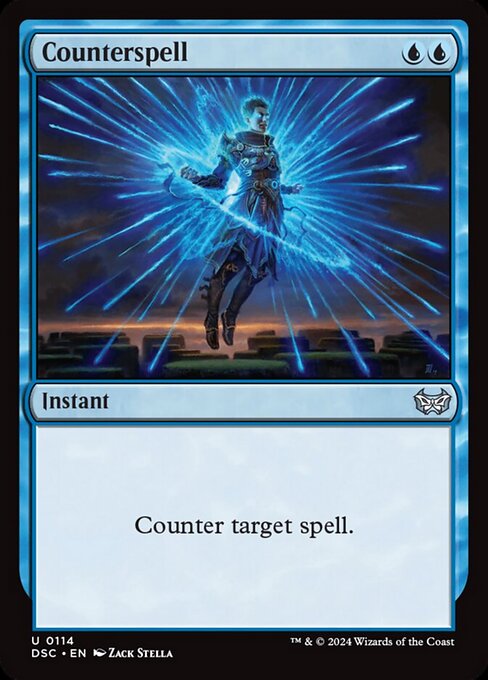
Deckbuilding follows standard 60-card rules with a 15-card sideboard, and the card pool spans Magic's entire history — any card printed as a common in any set, including online-only sets, is legal. This gives Pauper access to efficient classics like Lightning Bolt, Counterspell, Brainstorm, and powerful common staples that define its tier-one decks. Because rarity is the only gate, the format has a vast and ever-growing card pool that designers continually expand with new commons.
The playstyle is fast, interactive, and refined, with a well-developed competitive metagame. Iconic archetypes include aggressive Mono-Red burn and Kuldotha aggro, Affinity built on artifact lands and cheap artifacts, Blue-based tempo and control decks leaning on Counterspell and card draw, Tron decks assembling Urza lands for big mana, Faeries tempo, and dedicated combo strategies. Despite the common-only restriction, games are sharp and skill-intensive, with tight resource management and powerful synergies.
Pauper's biggest draw is accessibility: because commons are inexpensive and plentiful, you can assemble a fully competitive deck for a tiny fraction of the cost of other constructed formats. This makes it ideal for budget-conscious players, newcomers wanting real competition without a huge investment, and veterans who appreciate lean, well-balanced gameplay. It is one of the easiest ways to play powerful, tournament-caliber Magic without breaking the bank.
The format is officially maintained by Wizards of the Coast, which manages the Pauper banned list. Bans tend to target individual commons that warp the metagame — overly efficient artifact lands, oppressive engines, or broken combos — rather than entire strategies. Wizards monitors both online and paper results and adjusts the list during regular Banned & Restricted announcements to keep the low-cost format diverse, healthy, and fun.
Top archetypes
Staple cards




FAQ
- Does a card have to be common right now to be Pauper-legal?
- No — a card is legal if it has been printed at common in any set, ever. If a card was once a common but later reprinted at a higher rarity, it remains legal in Pauper.
- Is Pauper actually competitive or just casual?
- Pauper is genuinely competitive, with a deep metagame and dedicated tournaments. Powerful commons like Lightning Bolt and Counterspell support strong tier-one archetypes, and matches are highly skill-intensive.
- How cheap is a real Pauper deck?
- Very cheap compared to other constructed formats. Because every card is a common, even top-tier decks cost a small fraction of what comparable Modern or Legacy decks would, making it one of the most affordable ways to play competitively.